Mục lục
Chuyển đổiViệt Nam mở rộng đối tượng đủ điều kiện cấp VNeID: Người có visa nước ngoài nay cũng đủ điều kiện, không chỉ riêng người có thẻ cư trú tạm thời (TRC).
Hiện nay, người nước ngoài tại Việt Nam có thể xin VNeID mà không cần Thẻ Tạm trú (TRC) không? Điều này có ý nghĩa gì đối với người lao động, nhà đầu tư và đại diện công ty nước ngoài?
Việt Nam đã thực hiện một thay đổi quan trọng đối với khung pháp lý về định danh điện tử, mở rộng quyền tiếp cận VNeID cho người nước ngoài. Resident Vietnam đã theo sát sự phát triển của VNeID dành cho người nước ngoài., Từ giai đoạn triển khai ban đầu cho người sở hữu chứng minh nhân dân (TRC) và chứng minh nhân dân (PRC) đến vai trò ngày càng quan trọng của định danh điện tử trong hệ thống hành chính số của Việt Nam.
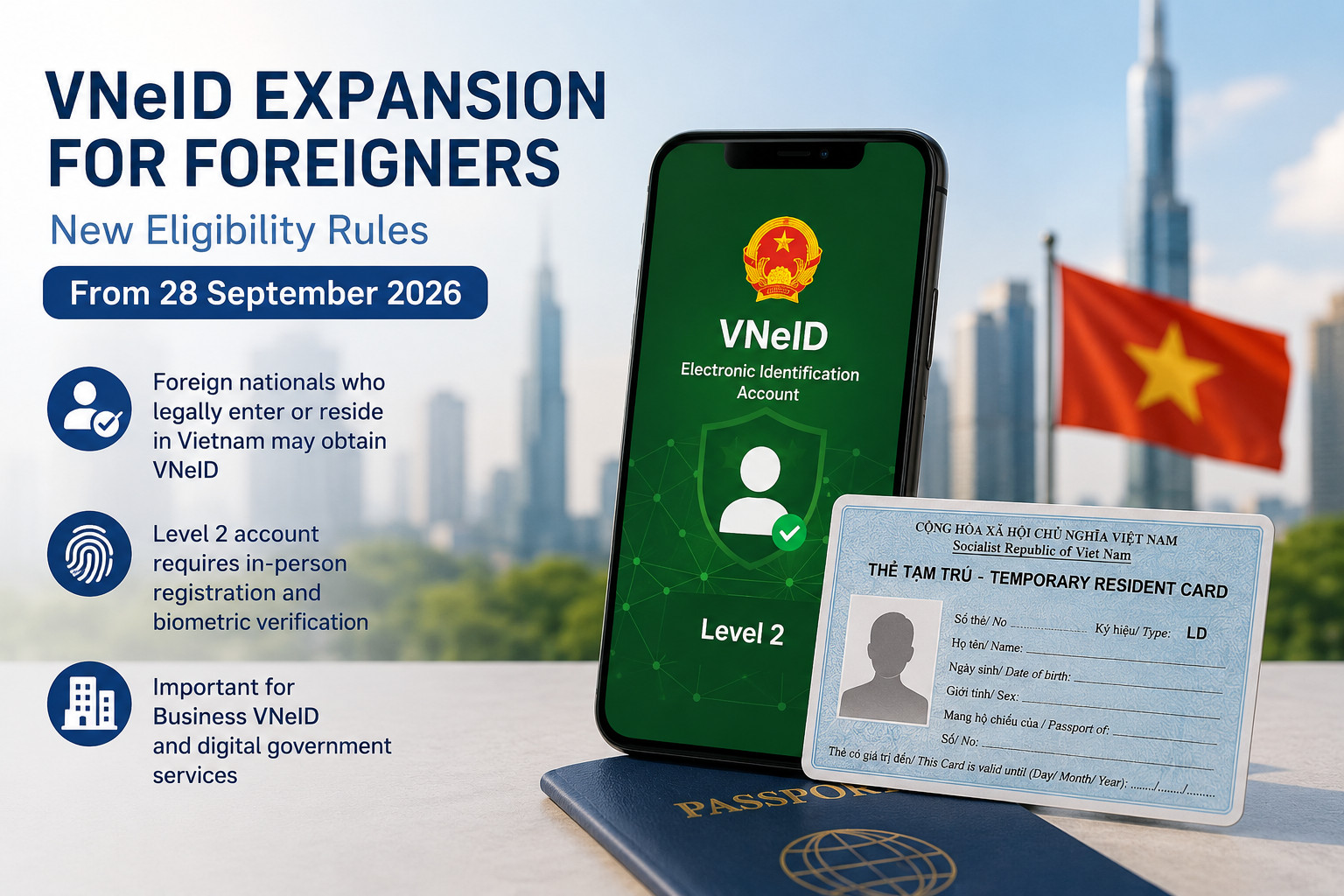
Sau khi ban hành Nghị định số 320/2026/NĐ-CP ngày 13 tháng 8 năm 2026, Theo thông báo, cơ quan quản lý xuất nhập cảnh tại Hà Nội và TP. Hồ Chí Minh đã công bố thông tin nêu bật những thay đổi quan trọng ảnh hưởng đến người nước ngoài. Nghị định mới sửa đổi Nghị định số 69/2024/NĐ-CP về định danh và xác thực điện tử, có hiệu lực từ ngày... Ngày 28 tháng 9 năm 2026.
Mở rộng đáng kể điều kiện cấp VNeID cho công dân nước ngoài
Thay đổi quan trọng nhất đối với cộng đồng người nước ngoài là việc mở rộng các đối tượng người nước ngoài đủ điều kiện để có được tài khoản định danh điện tử.
Theo khuôn khổ trước đây, điều kiện để công dân nước ngoài đủ điều kiện về cơ bản gắn liền với việc sở hữu một giấy tờ tùy thân. Thẻ thường trú (PRC) hoặc Thẻ tạm trú (TRC) Ở Việt Nam.
Nghị định 320/2026/NĐ-CP Điều này mở rộng đáng kể phạm vi.
Theo các quy định mới, Công dân nước ngoài nhập cảnh hoặc cư trú hợp pháp tại Việt Nam có thể được cấp tài khoản định danh điện tử theo yêu cầu..
Đây là một bước phát triển quan trọng, vì nó loại bỏ hạn chế trước đây vốn đã loại trừ hiệu quả nhiều người nước ngoài cư trú hợp pháp tại Việt Nam nhưng không có Thẻ tạm trú hoặc Thẻ thường trú.
Khung pháp lý trước đây chủ yếu áp dụng cho người có thẻ cư trú TRC hoặc PRC. Khung pháp lý mới mở rộng phạm vi áp dụng cho công dân nước ngoài nhập cảnh hoặc cư trú hợp pháp tại Việt Nam.
Tài khoản định danh điện tử cấp 1 và cấp 2
Công dân nước ngoài đủ điều kiện theo khuôn khổ mới có thể yêu cầu mở tài khoản nhận dạng điện tử.
Đối với người nước ngoài từ sáu tuổi trở lên, các thủ tục để có được một Tài khoản nhận dạng điện tử cấp 2 Yêu cầu người nộp đơn phải trực tiếp đến trình diện trước cơ quan có thẩm quyền.
Trong quá trình này, các cơ quan chức năng sẽ xác minh thông tin của người nộp đơn và thu thập các dữ liệu sinh trắc học cần thiết, bao gồm: hình ảnh khuôn mặt và dấu vân tay.
Cơ quan quản lý xuất nhập cảnh đã cho biết rằng các đơn xin nhập cảnh có thể được nộp thông qua các cơ quan xuất nhập cảnh có liên quan theo đúng quy trình quy định.
| Cấp độ tài khoản | Yêu cầu chính |
|---|---|
| Cấp độ 1 | Chương trình này dành cho công dân nước ngoài đủ điều kiện theo khuôn khổ nhận dạng điện tử hiện hành. |
| Cấp độ 2 | Yêu cầu người nộp đơn phải trực tiếp đến cơ quan có thẩm quyền để xác minh thông tin và thu thập dữ liệu sinh trắc học. |
Vì sao sự phát triển này lại đặc biệt quan trọng
Sự thay đổi này diễn ra vào thời điểm quan trọng đối với cư dân nước ngoài, nhà đầu tư và đại diện doanh nghiệp tại Việt Nam.
Việt Nam đang từng bước chuyển các thủ tục hành chính lên nền tảng số, trong đó VNeID ngày càng trở nên quan trọng để tiếp cận các dịch vụ của chính phủ và hoàn thành các thủ tục hành chính điện tử.
Resident Vietnam trước đây đã đăng tải một bài viết Hướng dẫn thực tế về VNeID dành cho người nước ngoài, bao gồm các yêu cầu đăng ký áp dụng cho công dân nước ngoài có giấy tờ hợp lệ. TRCs hoặc PRC, cũng như quy trình cập nhật thông tin sau khi nhận được hộ chiếu hoặc thẻ cư trú mới.
Do đó, việc mở rộng phạm vi đối tượng đủ điều kiện được đưa ra bởi Nghị định 320 sẽ giúp giải quyết một trở ngại thực tiễn quan trọng mà người nước ngoài gặp phải khi tương tác với hệ thống hành chính số hóa ngày càng phát triển của Việt Nam.
Sự phát triển này cũng diễn ra sau đợt triển khai ban đầu việc đăng ký VNeID cho người nước ngoài vào tháng 7 năm 2025. Ở giai đoạn đó, đối tượng đủ điều kiện tập trung vào người nước ngoài có Thẻ Tạm trú hoặc Thẻ Thường trú hợp lệ. Trang Resident Vietnam đã đưa tin về sự phát triển ban đầu đó trong bài viết của mình. VNeID sẽ có hiệu lực từ ngày 1 tháng 7 dành cho người nước ngoài..
Ý nghĩa đối với VNeID trong kinh doanh
Sự phát triển này cũng đặc biệt có ý nghĩa trong bối cảnh của Mã định danh doanh nghiệp VNeID.
Các công ty Việt Nam và các doanh nghiệp có vốn đầu tư nước ngoài ngày càng được yêu cầu sử dụng định danh điện tử của tổ chức để truy cập vào các cổng thông tin của chính phủ và hoàn thành các thủ tục hành chính trực tuyến.
Trên thực tế, điều này đã gây khó khăn cho một số công ty có vốn đầu tư nước ngoài khi người đại diện pháp lý là công dân nước ngoài không thể có được tài khoản VNeID cá nhân phù hợp.
Bằng việc mở rộng quyền sử dụng định danh điện tử cá nhân cho người nước ngoài nhập cảnh hoặc cư trú hợp pháp tại Việt Nam, các quy định mới sẽ giúp các đại diện pháp lý nước ngoài dễ dàng hơn trong việc tham gia thiết lập và quản lý tài khoản Business VNeID của công ty mình.
Điều này dự kiến sẽ đặc biệt quan trọng đối với các doanh nghiệp có vốn đầu tư nước ngoài mà người đại diện pháp lý thường xuyên có mặt tại Việt Nam nhưng không đủ điều kiện sử dụng VNeID theo khuôn khổ trước đây và không có Giấy chứng nhận cư trú (TRC).
VNeID dành cho doanh nghiệp ngày càng trở nên quan trọng đối với các công ty hoạt động tại Việt Nam. Từ tháng 6 năm 2026, các doanh nghiệp và tổ chức đã phải đối mặt với những thay đổi đáng kể trong cách thức truy cập hệ thống trực tuyến của chính phủ và nộp đơn xin nhập cảnh. Resident Vietnam đã từng phân tích những diễn biến này trong hướng dẫn của mình về VNeID dành cho Doanh nghiệp và Tổ chức.
Những thay đổi đáng chú ý khác
Bên cạnh việc mở rộng phạm vi áp dụng cho người nước ngoài, Nghị định 320 còn đưa ra một số thay đổi khác đối với khung pháp lý về định danh điện tử của Việt Nam.
Các thay đổi này bao gồm điều chỉnh thông tin trong danh tính điện tử, thay đổi quy trình xác thực điện tử, rút ngắn thời gian xử lý trong một số trường hợp nhất định và sử dụng nhiều hơn thông tin và tài liệu đã được tích hợp vào VNeID.
Mục tiêu rộng hơn là tiếp tục tích hợp định danh điện tử vào các dịch vụ hành chính công của Việt Nam và giảm sự phụ thuộc vào giấy tờ tùy thân.
Người nước ngoài và các công ty nước ngoài nên làm gì?
Các điều khoản mới sẽ có hiệu lực vào ngày... Ngày 28 tháng 9 năm 2026.
Những công dân nước ngoài trước đây không thể có VNeID vì không có Thẻ cư trú tạm thời hoặc Thẻ cư trú vĩnh viễn nên xem xét lại điều kiện của mình sau khi các quy định mới có hiệu lực.
Các công ty có vốn đầu tư nước ngoài mà người đại diện pháp lý nước ngoài gặp khó khăn trong việc thiết lập hoặc kích hoạt Business VNeID cũng nên xem xét lại tình hình của mình trong bối cảnh diễn biến này.
Các công ty có thể muốn xác định những người đại diện pháp lý nước ngoài và các nhân sự chủ chốt nước ngoài khác trước đây không thể có được tài khoản nhận dạng điện tử cá nhân và đánh giá xem khuôn khổ mới có thể giải quyết những khó khăn hành chính hiện có hay không.
Cũng như nhiều thủ tục hành chính điện tử mới được áp dụng tại Việt Nam, việc thực hiện thực tế ban đầu có thể khác nhau trong quá trình các cơ quan chức năng cập nhật hệ thống và quy trình địa phương. Do đó, các công ty và người nước ngoài nên theo dõi hướng dẫn thực hiện và thực tiễn hoạt động của Cục Quản lý Xuất nhập cảnh sau ngày có hiệu lực.
Câu hỏi thường gặp
VNeID có thay thế được Thẻ cư trú tạm thời hoặc Visa không?
KHÔNG. Việc mở rộng phạm vi áp dụng VNeID không thay thế các yêu cầu riêng biệt về nhập cư và cư trú của Việt Nam.
VNeID liên quan đến định danh điện tử và truy cập các dịch vụ hành chính số. Nó không loại bỏ sự cần thiết đối với người nước ngoài phải có thị thực, giấy phép lao động, Thẻ tạm trú hoặc các giấy tờ nhập cư khác theo quy định của Việt Nam.
Do đó, công dân nước ngoài và các công ty nên coi VNeID như một phần bổ sung trong chiến lược tuân thủ quy định nhập cư và hành chính của họ, chứ không phải là sự thay thế cho các giấy tờ nhập cư hiện có.
Người nước ngoài có thể lấy VNeID tại Việt Nam mà không cần TRC (Giấy chứng nhận cư trú) không?
Theo khuôn khổ mới được ban hành bởi Nghị định 320/2026/NĐ-CP, công dân nước ngoài nhập cảnh hoặc cư trú hợp pháp tại Việt Nam có thể được cấp tài khoản định danh điện tử theo yêu cầu. Điều này mở rộng đáng kể đối tượng đủ điều kiện so với khuôn khổ trước đây, vốn chủ yếu chỉ dành cho người có thẻ cư trú (TRC) và thẻ thường trú (PRC).
Quy định mới về VNeID dành cho người nước ngoài sẽ có hiệu lực khi nào?
Các quy định mới được ban hành theo Nghị định 320/2026/NĐ-CP sẽ có hiệu lực vào ngày... Ngày 28 tháng 9 năm 2026.
Người đại diện pháp lý nước ngoài có thể sử dụng Business VNeID được không?
Việc mở rộng điều kiện này đặc biệt quan trọng đối với các đại diện pháp lý nước ngoài và đại diện công ty, những người trước đây gặp khó khăn trong việc xin tài khoản định danh điện tử cá nhân vì không có Chứng minh nhân dân (TRC). Khung pháp lý mới này sẽ giúp các đại diện nước ngoài đủ điều kiện dễ dàng tham gia vào các thủ tục Định danh điện tử doanh nghiệp (Business VNeID).
Người nước ngoài có còn cần thẻ cư trú (TRC) sau khi đã có VNeID không?
Đúng vậy. VNeID không thay thế các giấy tờ nhập cư cần thiết cho từng trường hợp cụ thể của công dân nước ngoài. Các quy định mới liên quan đến điều kiện nhận dạng điện tử và không loại bỏ các yêu cầu riêng biệt về thị thực, giấy phép cư trú hoặc giấy phép lao động.
Người nước ngoài có thể đăng ký VNeID ở đâu?
Đối với tài khoản định danh điện tử cấp độ 2, công dân nước ngoài từ sáu tuổi trở lên phải đến trực tiếp cơ quan có thẩm quyền để xác minh thông tin và thu thập dữ liệu sinh trắc học cần thiết, bao gồm hình ảnh khuôn mặt và dấu vân tay.
Cư trú tại Việt Nam và Tương lai của VNeID dành cho người nước ngoài
Quá trình chuyển đổi hành chính số của Việt Nam đang diễn ra nhanh chóng, và VNeID ngày càng trở nên quan trọng đối với người nước ngoài và các công ty hoạt động trong nước.
Việc mở rộng phạm vi áp dụng theo Nghị định 320/2026/NĐ-CP thể hiện một bước tiến quan trọng, đặc biệt đối với người lao động, nhà đầu tư và người đại diện pháp lý nước ngoài trước đây không thể tiếp cận giấy tờ tùy thân điện tử do không có chứng minh nhân dân hoặc chứng minh nhân dân.
Cán bộ phụ trách tại Việt Nam sẽ tiếp tục theo dõi việc thực hiện Nghị định 320/2026/NĐ-CP và việc triển khai thực tế các thủ tục VNeID mới dành cho người nước ngoài. Trong quá trình triển khai, chúng tôi sẽ cung cấp thêm thông tin cập nhật về các yêu cầu đăng ký, thủ tục và những tác động đối với người lao động, nhà đầu tư và công ty nước ngoài tại Việt Nam.