Domestic flights are one of the fastest and most convenient ways to travel across Vietnam — whether you are visiting Phu Quoc for a weekend getaway, attending a meeting in Hanoi, or traveling between Ho Chi Minh City and central Vietnam for work.
However, uncertainty remains among many foreign residents and travelers regarding which identification documents are required when flying domestically in Vietnam.
- Do foreigners need to carry their passport on domestic flights?
- Is a Temporary Residence Card (TRC) sufficient?
- Can VNeID digital identification replace physical documents?
- And what about dependents or children traveling within Vietnam?
Following recent guidance from Vietnamese authorities in 2026, airlines and airport security may now request both a passport and proof of legal residence, even when taking a domestic flight within the country.
In this guide, Resident Vietnam explains exactly what documents foreigners must carry when taking domestic flights in Vietnam, including passport requirements, Temporary Residence Cards, visas, and digital identification options such as VNeID.
By understanding these rules before traveling, foreign residents can avoid unnecessary delays at airport check-in or security and ensure a smoother domestic travel experience across Vietnam.
What Changed Recently in 2026 for Vietnam Domestic Flights?
Vietnamese authorities have recently reiterated the requirements for identity verification on domestic flights pursuant to Circular No. 14/2026/TT-BCA issued by the Ministry of Public Security, which regulates aviation security and aviation security quality control in Vietnam.
For foreign nationals, airlines and airport security may require passengers to present:
- Valid Immigration documentation in Vietnam along with
- Passport (previously not required for domestic travel)
These documents confirm both identity and legal residence status in Vietnam.
The valid Immigration document can include:
- Temporary Residence Card (TRC)
- Permanent Residence Card
- Valid visa or visa exemption documentation
For many expatriates, especially those with work permits, this means carrying both your passport and your TRC when flying domestically.
If You Have a Work Permit (Typical Corporate Expats)
Most foreign employees and assignees in Vietnam fall into this category.
Recommended documents to bring:
- Passport
- Temporary Residence Card (TRC) or Long-term Work Visa (if not endorsed in the passport)
What About Dependents (Family)?
Dependents of work permit holders (spouses and children) usually have:
- Passport
- Temporary Residence Card (TRC) or Long-term Dependent Visa (if not endorsed in the passport)
They should carry the same combination of documents when traveling domestically.
In 2026, travelling domestically only with a Temporary Residence Card or Permanent Residence Card is no longer sufficient.
If You Do NOT Have a Work Permit
Many foreigners in Vietnam fall into this group, for example:
- Tourists
- Business travelers
- People on short‑term visas
- Visa‑exempt visitors
Recommended documents to bring:
- Passport
- Valid visa or entry stamp (if not endorsed in the passport)
Airlines and airport security typically check that the passport includes a recent Vietnam entry stamp or valid visa confirming legal stay in the country.
VNeID – Digital ID Has An Alternative to Physically Documents
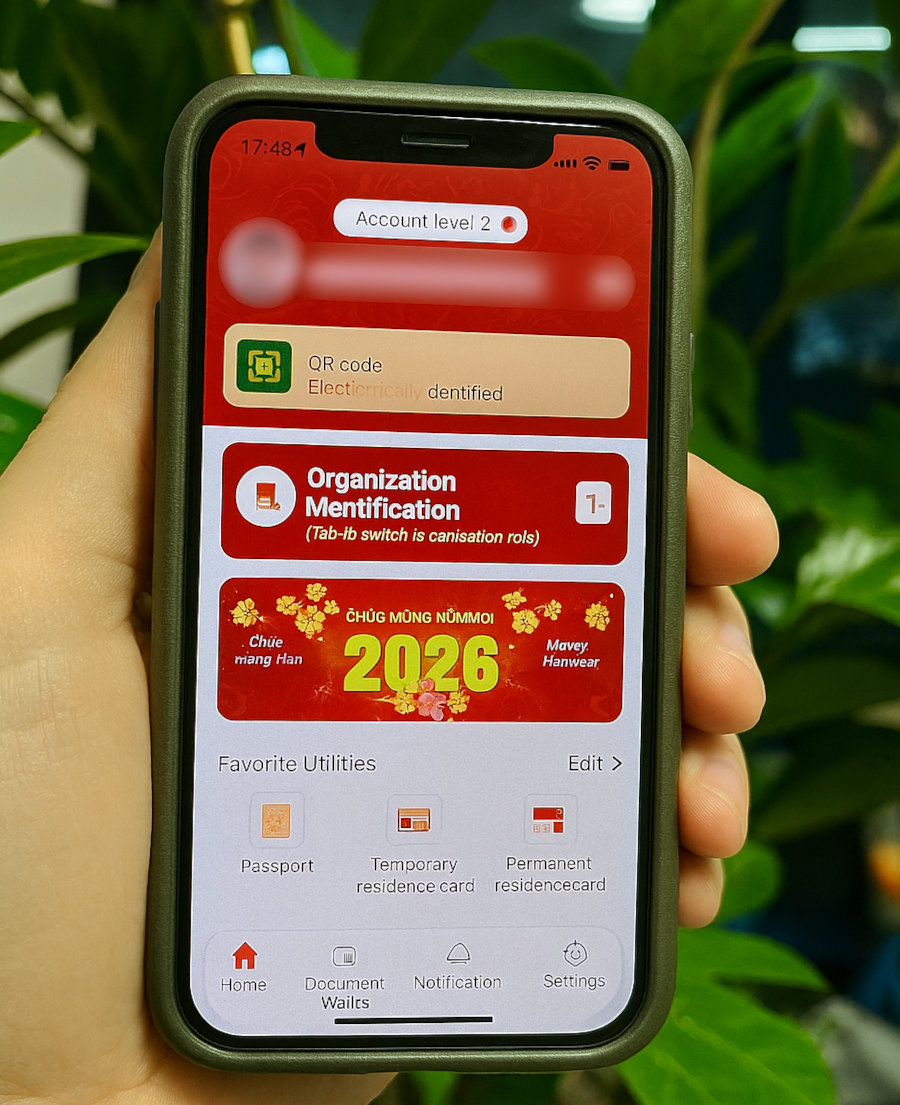
VNeID is Vietnam’s official digital identification system that allows users to access a wide range of government and daily-life services through a secure mobile application (download for Android & iOS).
Since July 2025, it has become available to foreign residents holding a valid Temporary Residence Card or Permanent Residence Card.
The Vietnamese government expects that this mobile application will help :
- reduce paperwork,
- simplify administrative procedures,
- support hotel check-ins and domestic travel,
- and enable secure online identity verification for services such as banking and telecommunications.
Having a VNeID account set up in advance, with passport and Temporary or Permanent Residence Card details already verified and available in the app, can serve as a convenient backup for foreign residents. It may be especially useful in urgent domestic travel situations or when physical documents are unavailable for any reason.
For the time being, Resident Vietnam still recommend that foreigners carry their physical documents when traveling, both on domestic flights and, of course, on international flights.
4 Practical Tips for Foreign Travelers to Vietnam in 2026
- Always carry your passport when traveling domestically
- Bring your Temporary Residence Card if you have one
- Make sure your visa or residence status is valid
- Ensure dependents and children have their own passports and Temporary Residence Card (if applicable)
While enforcement can vary between airports or airlines, having the correct documents helps avoid delays at check‑in or security.
How Resident Vietnam Can Help?
Resident Vietnam’s teams in HCMC and Hanoi assists companies and employees with:
- Work permits
- Temporary residence cards
- Visa renewals and extensions
- Register for VNeID
- Immigration compliance
If you have questions about your immigration status or documentation, feel free to contact our team.
Contact Resident Vietnam for more Details!
FAQ – Domestic Flights in Vietnam
Do foreigners need a passport for domestic flights in Vietnam in 2026?
Yes. Under recent aviation security guidance, foreign passengers may be required to present a valid passport along with immigration documentation when boarding domestic flights in Vietnam.
Can I fly domestically in Vietnam with only a Temporary Residence Card?
Previously this was often accepted, but authorities now recommend carrying both your passport and Temporary Residence Card.
Do children of foreign residents need passports for domestic flights?
Yes. Each passenger, including children, should carry their own passport and valid residence or visa documentation.
Can VNeID replace a passport when flying domestically?
At the time of writing, VNeID can assist with digital identification and may allow you to check in for your flight. However, we advise exercising caution, as airlines and security authorities may still require physical documents in certain cases