On 31 December 2025, the Socialist Republic of Vietnam acceded to the Hague Convention of 5 October 1961 Abolishing the Requirement of Legalization for Foreign Public Documents, also known as the Apostille Convention. This was reported by the official website of the Hague Conference on Private International Law.
The Convention will take effect starting from September 11, 2026 between Vietnam and other member states that have not filed an objection to Vietnam’s accession during the 6 months transition period.
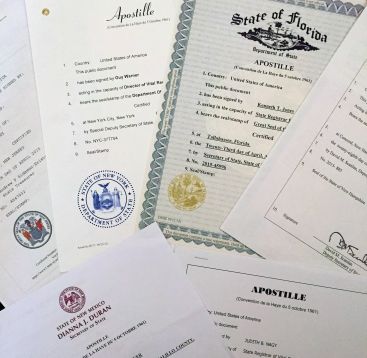
What is the Apostille Convention?
The Apostille Convention (full name: the 1961 Hague Convention Abolishing the Requirement of Legalization for Foreign Public Documents) is an international treaty that simplifies the certification procedures required for documents used abroad.
The Convention replaces the multi-step consular legalization process in both the country of origin and the receiving country (consular certification in the originating country and consular legalization in the receiving country) with the issuance of an Apostille stamp in the originating country.
With Vietnam’s accession, the Apostille Convention now has 129 member states, including the United States, European countries, China, Japan, South Korea, Australia, Singapore and many others.
The Current Legalization Process: Administrative, Logistical and Financial Burdens
Preparing documentation for work permit and immigration applications for foreigners in Vietnam, particularly documents issued overseas such as assignment letters, experience confirmation letters, marriage certificates, birth certificates and academic diplomas, has long been recognized as a complex and time-consuming process. Under the current legalization regime, these documents must typically undergo multiple layers of certification, including notarization in the country of origin, authentication by the competent local authority, legalization by the Vietnamese consulate or embassy abroad, and in some cases further certification upon arrival in Vietnam.
Beyond the administrative burden, this process often involves significant logistical complexity. Documents frequently need to be physically couriered across jurisdictions, sometimes multiple times, increasing the risk of delays, lost documents, or errors that require reissuance. Coordination between employers, employees, foreign notaries, consular authorities and Vietnamese agencies can extend timelines considerably. In practice, the full legalization process can take several weeks, and in some cases months, particularly when documents must be corrected and reprocessed.
The financial cost is also substantial. Companies and assignees typically bear expenses related to notarial services, consular legalization fees, certified translations, international courier services, and professional advisory support. For multinational employers handling multiple work permit or visa applications each year, these costs can accumulate significantly. In addition, prolonged processing times may delay project deployment, onboarding schedules and operational readiness, indirectly increasing business costs.
Apostille Convention: A Simplified Process for International Labor and Immigration Matters
Vietnam’s accession to the Apostille Convention is therefore expected to bring a meaningful shift in the treatment of foreign public documents. By replacing the multi-step consular legalization procedure with a single Apostille issued in the country of origin, administrative layers will be reduced, documentation timelines shortened, and overall costs lowered. For foreign experts and investors, this should translate into a more predictable, streamlined and business-friendly process when preparing documentation to work and reside in Vietnam.
This development aligns with the Vietnamese Government’s broader objectives of administrative reform, digital transformation and deeper international integration. A simplified authentication regime enhances Vietnam’s attractiveness as a destination for foreign investment and skilled international talent.
Importantly, the benefits are reciprocal. Vietnamese public documents will likewise become easier to use abroad in Apostille member states. This will facilitate cross-border study, employment, investment and personal matters for Vietnamese citizens overseas, former residents of Vietnam, and international businesses operating in multiple jurisdictions.
In the coming months, Vietnamese authorities are expected to finalize implementing regulations and provide operational guidance to ensure effective application of the Convention from its entry into force. Businesses and individuals should monitor further guidance to understand the practical rollout and transitional arrangements.
Make sure to subscribe to our newsletter for the latest updates and practical guidance on how Vietnam’s accession to the Apostille Convention may impact your work permits and immigration planning