Updated October 22nd 2026
Vietnam has become an increasingly attractive destination for international professionals, investors, and companies expanding into Southeast Asia. However, for foreign employees planning to work in Vietnam, obtaining the correct authorization is one of the most important steps before starting employment.
A work permit is not simply an administrative formality — it is a legal requirement that involves multiple documents, approvals, and coordination between the employee, employer, and Vietnamese authorities.
Many companies and expatriates underestimate the complexity of the process, especially when dealing with document legalization, eligibility requirements, changing regulations, and strict application procedures.
Regulatory update: Decree 393/2026/ND-CP was issued on 20 October 2026 and is scheduled to take effect on 5 December 2026, replacing Decree 219/2025/ND-CP from that date. Until then, the existing framework under Decree 219 remains applicable. Read our overview of Decree 393 and its upcoming work-permit changes for a summary of the new provisions.
Common questions include:
- What are the Vietnam work permit requirements for foreigners?
- How long does a Vietnam work permit application take?
- Can an expat start working before receiving a work permit?
- Which documents are required for a Vietnam work permit?
- What happens if a work permit application is rejected?
- How does the work permit process affect immigration to Vietnam?
At Resident Vietnam, we support international employees and companies throughout their relocation journey, helping them navigate immigration procedures, work authorization, and settling-in requirements with a smoother and more predictable process.
This guide explains the Vietnam work permit process step by step, including requirements, timelines, common mistakes, and why early preparation is essential.
Understanding the Vietnam Work Permit
What is a Vietnam work permit?
A Vietnam work permit is an official authorization allowing foreign nationals to legally work for a Vietnamese company or organization.
Most foreign employees working in Vietnam are required to obtain a work permit unless they qualify for a Work Permit Exemption Certificate (WPEC) or fall within a category that is exempt from both work-permit and WPEC requirements.
A work permit confirms that:
- The employee meets the applicable Vietnamese labour requirements.
- The employer is authorized to employ or host the foreign worker under the relevant arrangement.
- The proposed position and working form meet the applicable requirements.
- The employee has the qualifications and experience required for the relevant category.
Without the correct authorization, companies and employees may face administrative penalties, employment restrictions, or immigration complications.
Who needs a work permit in Vietnam?
Generally, foreign nationals working in Vietnam in a covered working form need a work permit unless a specific exemption applies.
This commonly includes:
- Foreign managers.
- Executives.
- Experts and specialists.
- Technical workers.
Exemptions depend on the specific circumstances, including:
- Position or role: Certain owners, investors, senior leaders, and representatives may qualify under specific legal categories.
- Duration and nature of the assignment: Some short-term activities may qualify, but a stay or assignment of less than 90 days is not, by itself, a universal exemption.
- Intra-company transfers: Employees transferred within multinational companies may qualify under specific conditions, including requirements relating to the company and the employee’s role.
- International agreements: Certain exemptions may arise from trade commitments, international treaties, or other applicable agreements.
- Investment status: Foreign investors, owners, or capital-contributing members may be subject to different requirements depending on their investment and legal position.
- Specialized activities: Certain roles involving diplomatic missions, international organizations, or qualifying projects may follow specific rules.
- Spouses of Vietnamese nationals: Foreigners married to Vietnamese citizens and residing in Vietnam may qualify for an exemption under the applicable conditions.
Not all exemptions work in the same way. Depending on the category, an employer may need to apply for a WPEC, submit a notification, or complete another prescribed formality. Do not assume that exemption from a work permit removes every administrative obligation.
Decree 393, scheduled to take effect on 5 December 2026, adds further exemption pathways for certain strategic-technology professionals, qualifying family members, and people recruited under the national AI talent-development programme. These are defined categories, not a blanket exemption for everyone working in technology. Qualifying family members should not assume that family status alone authorizes them to work; a separate exemption-certificate application may be required through the sponsoring entity. See our dedicated guide to the Vietnam Work Permit Exemption Certificate (WPEC) and our Decree 393 overview for more details.
Vietnam Work Permit Requirements
1. Passport validity: a detail that can block the process
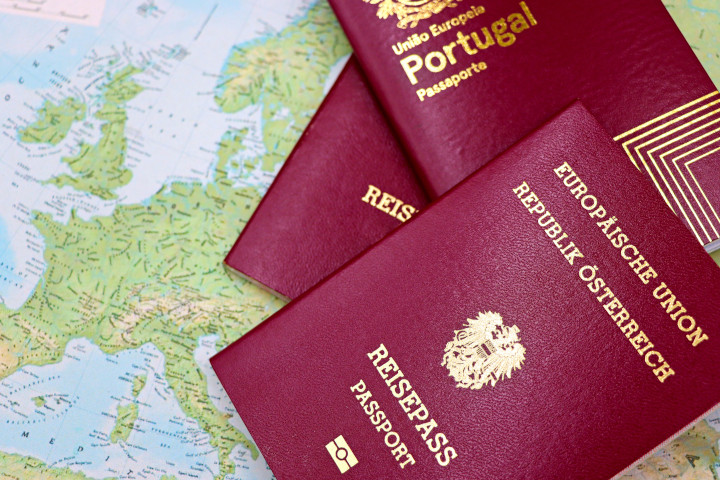
Before starting a Vietnam work permit application, companies should verify that the employee’s passport remains valid for the intended assignment and related immigration steps.
A passport expiring soon can create complications because work-permit, visa, and Temporary Residence Card (TRC) validity are linked to the employee’s identity documents and the applicable rules.
If a passport expires shortly after arrival:
- The work permit may not cover the full expected assignment period.
- The visa or TRC may be limited by the passport’s remaining validity. TRC eligibility also depends on the applicable validity requirements for the passport and work permit.
- The employee may face practical restrictions while holding a work visa rather than a TRC, depending on the service or administrative procedure involved.
- The employee and employer may need to update multiple immigration and employment records following passport renewal.
For this reason, companies should ask employees to renew passports in good time when the remaining validity may not cover the planned initial work period or related immigration requirements.
Check passport validity before arranging legalization or authentication of supporting documents, as changes to passport details can create additional work.
2. Health certificate requirements

A valid health certificate is required for most foreign employees applying for a Vietnam work permit, subject to the applicable rules and any category-specific provisions.
Under the framework currently in force, overseas health certificates are subject to the applicable recognition conditions. In practice, many foreign nationals complete the required medical examination at an accepted medical facility in Vietnam.
From 5 December 2026: Decree 393 expressly provides for health certificates issued by competent medical institutions in Vietnam or overseas and does not repeat the same express mutual-recognition wording. Employers should confirm how overseas certificates will be assessed in practice and check any applicable implementing guidance before relying on a certificate issued abroad. See our Decree 393 update for the regulatory context.
The medical examination in Vietnam is usually completed at an accepted hospital or medical facility and may include:
- General physical examination.
- Blood pressure, height, and weight measurements.
- Vision, hearing, and dental checks.
- Blood and urine tests.
- Chest X-ray.
- Review of medical history.
- A medical conclusion confirming fitness for work.
Common mistakes include:
- Using a facility whose certificate is not accepted for the relevant procedure.
- Submitting an expired health certificate; check the applicable validity period, generally measured against the application date.
- Providing incomplete medical results or omitting the required fitness conclusion.
For ordinary work-permit extensions under Decree 393, a new health certificate is not listed in the required dossier. Confirm that the relevant extension procedure applies to the case before omitting medical documentation.
3. Education and experience requirements
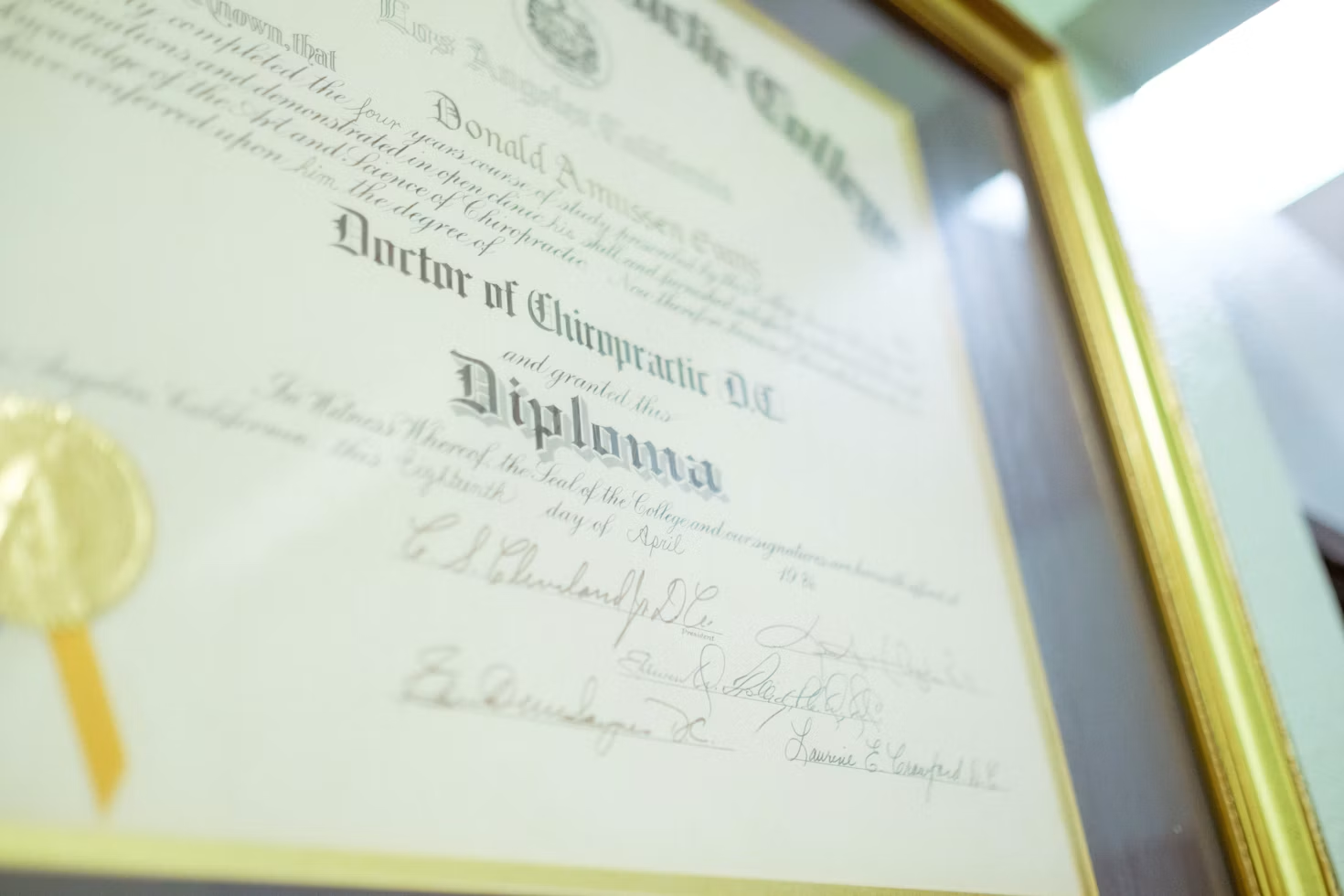
Vietnam does not issue work permits solely because a foreign employee has received a job offer. The employee must demonstrate that they qualify for the proposed position under the applicable category.
Under Decree 219/2025/ND-CP, currently applicable until 4 December 2026, the main routes include:
- Expert: A university degree or equivalent qualification and at least two years of relevant experience; or, for qualifying priority fields, a degree in the relevant specialty and at least one year of relevant experience.
- Technical worker: At least one year of relevant training and at least two years of relevant experience, or at least three years of relevant experience.
- Executive director: The specific route depends on the position. A person directly managing an operational field under the existing framework generally needs at least three years of relevant experience.
- Manager: The applicant must meet the legal definition and provide evidence of the relevant management position.
From 5 December 2026, Decree 393 introduces further qualification routes. The established expert route based on a university degree or equivalent and at least two years of relevant experience remains. The new decree also provides routes for certain experts, including:
- Applicants with a degree or equivalent in a specialty included in the strategic-technology or strategic-technology-product lists specified by the relevant Prime Minister’s decision or government cooperation agreement.
- Applicants with an excellent bachelor’s degree or higher in a science or technology field from a qualifying top-500 university, plus at least one year of relevant experience.
- Qualifying experts in culture, arts, sports, teaching, scientific research, or academic exchange who meet the specific conditions set out in the decree and applicable education rules.
- Experts with at least five years of relevant experience.
For the executive-director category involving direct management of a field of activity, Decree 393 specifies two years of relevant experience, alongside the requirement to demonstrate genuine managerial authority. The new decree also provides specific exemptions for certain strategic-technology professionals and other qualifying roles.
The new provisions are not a blanket relaxation of the criteria for every foreign worker. The correct category, documentary evidence, and actual duties must match the position and the route being used.
Decree 393 also changes the intra-company transfer framework. It is defined around managers, executive directors, and experts; technical workers are no longer included as a separate category within that definition. A technical worker who qualifies under the technical-worker category does not therefore automatically qualify for an intra-company transfer exemption. Employers should check the proposed classification and whether another route, including the experience-based expert pathway, is available and fully meets the relevant conditions.
Read our summary of the main changes introduced by Decree 393 before planning an application under the post-5 December framework.
The submitted documents must clearly support the proposed position in Vietnam. For example, a degree in marketing combined with relevant marketing experience will generally support a marketing role more clearly than unrelated qualifications. Authorities may review whether the employee’s background genuinely matches the job being proposed.
4. Visa status before applying for a Vietnam work permit
A common misunderstanding is that foreigners can arrive as tourists and begin working while the work-permit application is being prepared.
In reality, the immigration status must match the intended purpose of stay. Employees may enter Vietnam under an appropriate visa or other immigration category connected to the circumstances of their visit, but a visa or entry permission does not itself authorize employment.
Employment-relocation arrangements may involve:
- Employer-sponsored business-visa arrangements where appropriate.
- Other suitable employer-sponsored entry procedures.
- Further immigration steps once the relevant work authorization is secured.
Important: Entering Vietnam as a tourist, on a business visa, or with an e-visa does not by itself give a foreign national the right to work. The work-permit and immigration processes should be planned together so that employment authorization, visa status, and residence arrangements remain aligned.
Recommended Document Preparation Order
One of the biggest mistakes companies make is collecting documents randomly. A better approach is to confirm the eligibility route first and then prioritize documents according to lead time, validity, and legalization requirements.
Step 1 — Confirm position eligibility
Before requesting documents, confirm:
- The proposed job title and actual duties in Vietnam.
- The foreign worker category (expert, manager, executive director, or technical worker).
- The applicable working form, including whether an intra-company transfer is being considered.
- The qualification pathway and evidence required.
- Whether the case requires a work permit, a WPEC, a notification, or another procedure.
This prevents the employee and employer from spending time and money preparing documents that do not support the intended application.
Step 2 — Order the longest-lead documents first
1. Criminal record or police clearance
A criminal record or police clearance certificate can be one of the slowest documents to obtain. Allow time for government processing, authentication or legalization where required, and translation.
Decree 393 adds criminal-record evidence to the initial WPEC dossier for affected cases. For online applications, the document may not need to be supplied where the competent authority can retrieve the relevant information from the criminal-record database. Employers should confirm whether that facility is available for the specific application rather than assume the paper document is unnecessary.
2. Degree and qualification documents
Prepare the university diploma, certificates, and other professional documents needed to demonstrate eligibility. Complete authentication or legalization, Vietnamese translation, and notarization or certification where required for the specific documents and procedure.
3. Experience confirmation documents
Prepare employer letters confirming:
- Position held.
- Employment dates.
- Relevant responsibilities and experience.
The experience evidence must support the intended Vietnam position and the relevant qualification pathway. For managerial and executive roles, documents should reflect the actual authority and duties involved, not simply the English-language job title.
4. Health certificate
Arrange the required medical examination at a facility accepted for the applicable procedure. Results in Vietnam are often available within one to five working days, depending on the facility. For applications submitted from 5 December 2026 onward, check the updated provisions on overseas-issued health certificates and ordinary extensions.
5. Passport copies, photos, and immigration documents
Prepare the identification documents required for the work-permit application, together with recent passport-style photos. The applicable specifications may include:
- Photo size of 4 cm × 6 cm.
- Photos taken within the required recent period.
- A plain background and a full, unobstructed view of the face.
Preparing spare copies may be useful, as photographs and identification documents can also be needed for related immigration procedures, including a Temporary Residence Card application.
Step 3 — Employer submits the application
The employer is responsible for coordinating and supporting the work-permit application process, unless a specific legal exception applies. The employee provides supporting documents, but the employer normally manages the application and coordination with the competent authorities. Resident Vietnam provides work-permit and immigration support for companies and foreign employees.
The company should:
- Prepare the employer-side documents and required explanations.
- Submit the application through the applicable filing process.
- Coordinate with the competent authority and respond to requests for clarification.
- Ensure that the employee’s category, job description, supporting evidence, and proposed working arrangement are consistent.
Additional requirements from 5 December 2026: Decree 393 calls for more precise occupational descriptions using five-digit occupation codes. Employers must also review recruitment-announcement requirements for the applicable categories. The decree provides an exception for the specified general director or director already named on the company’s business registration document. Confirm the relevant requirements for the position before filing. Our Decree 393 article summarizes these changes.
Employer Compliance Beyond the Application
Obtaining a work permit or exemption certificate is only one part of the employer’s obligations. Companies should also ensure that the foreign employee’s working arrangement reflects the actual employment and service structure.
From 5 December 2026, Decree 393 expressly requires foreign employment to meet the employer’s own direct needs and prohibits foreign labour subleasing. Arrangements that deserve careful review include:
- Employer-of-record (EOR) services.
- Payroll-only sponsorship.
- Foreign employees placed under a client’s day-to-day management.
- Service contracts that, in substance, supply personnel rather than deliver an independently managed service.
This does not mean every outsourced service is prohibited. A provider delivering its own contracted service is different from a company supplying workers to another business. The actual employment relationship, supervision, contractual structure, and way the service is delivered must be assessed. See our article on Employer-of-Record arrangements in Vietnam for further context.
Periodic reporting on foreign workers
Decree 393 also reintroduces an express periodic reporting obligation for employers of foreign workers. The reporting deadlines set by the new decree are before 5 June and before 5 December each year, replacing the earlier Decree 152 framework deadlines of before 5 July and 5 January.
Employers must maintain paper or electronic records and provide information when requested by the competent local authority or when relevant changes occur in their use of foreign workers. An exception may apply where the relevant information can be retrieved from the foreign-worker database. Employers should verify how this exception is implemented in practice and should not assume that a previous permit filing automatically removes all reporting obligations.
These new employer-accountability provisions are scheduled to apply from 5 December 2026. Before the first reporting deadline under the new schedule, employers should check any transitional instructions and confirm how the database-related exception is applied in practice. For an overview of the wider changes, see Vietnam’s Decree 393 on Work Permits.
FAQ — Vietnam Work Permit
How long is a Vietnam work permit valid?
A Vietnam work permit is generally issued for a maximum period of two years and is linked to the employee’s specific employment arrangement and the applicable regulations. Under the relevant rules, an extension may be available once for a further maximum period of two years, provided the employee continues working in Vietnam and meets the applicable requirements. Certain intra-company transfer exemption certificates within the relevant WTO service sectors may be issued for up to three years under Decree 393.
Are there different types of work permits in Vietnam?
Vietnam does not issue separate work-permit documents in the same way that it issues different visa or residence-card categories. However, the application depends on the foreign worker’s category and working form. The main categories include:
- Expert: Relevant qualifications and experience under the applicable route.
- Manager or executive director: Evidence of the management position and duties.
- Technical worker: Relevant training and/or experience.
Some foreign workers may instead qualify for a WPEC or for an exemption subject to notification or other requirements. These are separate procedural routes, not automatic consequences of holding a particular job title. See our guide to the Work Permit Exemption Certificate for more information.
Can I apply for a Vietnam work permit from abroad?
Yes. Preparation can begin before arrival. Many documents should ideally be collected or prepared overseas, especially police clearance, degree and experience evidence, and assignment documents where applicable. Depending on the procedure, authentication or legalization and Vietnamese translation may also be required. Certain steps, including some medical examinations, may be easier to complete in Vietnam.
Is the employer responsible for the work permit?
Yes. The Vietnamese employer is generally responsible for coordinating the work-permit or exemption process and ensuring compliance. The employee provides the necessary documents, while the company normally manages submission and communication with the authorities. Related immigration documents, such as work visas and TRCs for employees and eligible dependants, should also be coordinated as part of the relocation plan.
Can I work while waiting for my work permit?
Foreign employees should only commence work once the appropriate work authorization has been secured and all required approvals or formalities are in place. Starting work too early can create compliance risks for both the employee and employer.
Does Vietnam reject work-permit applications based on specific health conditions?
The health certificate is used to confirm that the employee is medically fit for the proposed work. Applicants should complete the required examination at a facility accepted for the applicable procedure and submit the documentation requested. The applicable certificate rules should be checked for applications made under Decree 219 before 5 December 2026 and Decree 393 from that date.
Can a Vietnam work permit be automatically renewed?
No. A Vietnam work permit is not automatically renewed when it expires. The employer remains responsible for preparing and submitting an extension application if the employee continues working in Vietnam. The process may require updated passport and immigration information, employment details, evidence that the employee continues to meet the relevant category, and other supporting documents depending on the case.
Companies should begin the process well before the expiry date to avoid gaps in authorization. An expired work permit can affect the employee’s legal right to work in Vietnam.
Can I change employer with a Vietnam work permit?
A work permit is linked to the applicable employer and approved working arrangement. If an employee changes companies, a new application will generally be required. In some cases, an existing permit may help demonstrate qualifications or experience, but it does not automatically authorize employment with a new employer.
What are the most common reasons for work-permit delays?
Common causes include:
- Missing or incorrectly prepared documents.
- Incomplete authentication, legalization, or translation.
- Passport-validity problems.
- A mismatch between qualifications, experience, and the proposed position.
- Incomplete employer-side documentation.
- Late preparation or unclear responsibility for a required step.
Starting early and confirming the correct application route are among the most effective ways to avoid unnecessary delays.
Do foreign documents need to be legalized?
Foreign-issued documents submitted to Vietnamese authorities generally need to be consularly legalized unless an applicable exemption applies, and they may need to be translated into Vietnamese and certified as required. Vietnam’s participation in the Hague Apostille Convention took effect on 11 September 2026 for cases where the Convention applies between the relevant countries and to the document concerned. An Apostille does not automatically apply to every country or every document. Read our guide to the Apostille Convention and work permits in Vietnam for details, and verify the current country-specific position before preparing documents.
Is there a minimum wage applicable to foreigners in Vietnam?
Foreign employees are subject to the applicable Vietnamese labour and wage rules, including regional minimum-wage requirements where relevant. There is no separate regional minimum-wage scale solely for foreign employees. The proposed compensation should also be consistent with the employment arrangement, role, and applicable requirements.
Vietnam work-permit timeline: how long does it take?
The overall timeline depends on the country where documents are issued, the need for authentication or legalization, medical arrangements, the completeness of the application, and the competent authority’s processing. The following estimates are planning guidelines rather than guarantees.
| Step | Estimated timeline |
|---|---|
| Police clearance and legalization | 2–8 weeks, depending on the country and procedure |
| Degree and experience document preparation | 1–4 weeks |
| Health certificate in Vietnam | Often 1–5 working days, depending on the facility |
| Authority processing after a complete submission | Decree 219 generally provides for a decision within 10 working days of a valid dossier; verify the deadline applicable from 5 December 2026 |
| Total preparation time | Ideally start 2–3 months before the intended start date |
Why Early Planning Matters for Immigration to Vietnam
A successful relocation requires coordination between:
- HR departments.
- Legal and compliance teams.
- Employees and their families.
- Immigration specialists.
- Relevant local authorities.
Starting early helps companies avoid compliance risks, reduce employee downtime, coordinate onboarding, plan housing and relocation services, and provide a better arrival experience.
A work permit is only one part of a successful move to Vietnam, but it is one of the foundations.
How Resident Vietnam Supports Work-Permit and Relocation Planning

Managing a Vietnam work-permit application while handling an international relocation can quickly become overwhelming.
Resident Vietnam helps international employees and companies coordinate key steps, including:
- Immigration support.
- Work-permit and exemption guidance.
- Relocation coordination.
- Housing assistance.
- Settling-in support.
By combining local knowledge with practical relocation experience, Resident Vietnam helps companies reduce uncertainty and coordinate the steps required for their international employees to start an assignment in Vietnam.
Final Thoughts
Obtaining a work permit in Vietnam requires careful preparation, accurate documentation, and a clear understanding of the rules in force at the time of application.
For foreign professionals and companies, the biggest risks usually come from incomplete documents, unrealistic timelines, and a lack of coordination between work authorization and immigration procedures.
Plan early, confirm the applicable route, and check whether the application falls under Decree 219 before 5 December 2026 or Decree 393 from that date. The new rules are summarized in our article on Vietnam’s Decree 393 on Work Permits.
Whether you are relocating a single employee or managing a larger international team, Resident Vietnam can support your immigration and relocation needs from preparation to arrival.
Contact us today to get started with your work-permit application or extension.